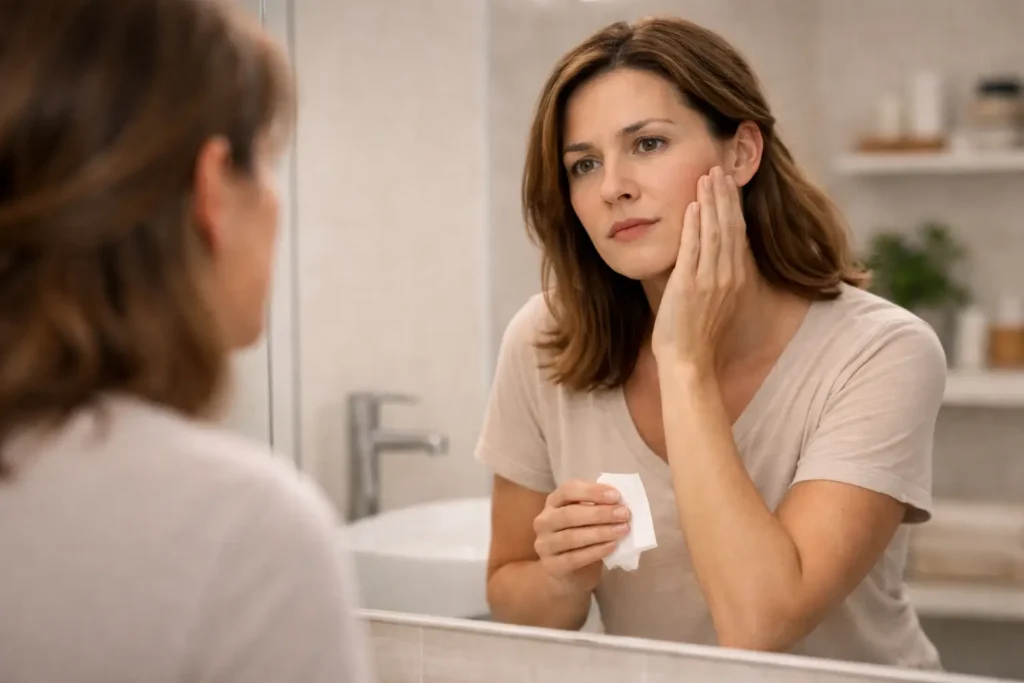
That sudden, jarring moment. 💥 Maybe it was a sports hit, a slip on the stairs, a toddler’s head flying up at exactly the wrong time, or biting down on something that absolutely did not feel like food. Your heart jumps. Your brain goes into overdrive. And your mouth—of all places—feels like the center of the universe for a minute.
If you’re feeling panicky, shaky, or even a little nauseous from the shock… that’s a very common reaction. And it makes perfect sense. ❤️ Oral injuries are loud emotionally. They bleed easily, they hurt quickly, and they can make you feel exposed and helpless all at once.
Here’s the calming truth: in those first few minutes, you don’t have to do everything. You just need one simple step that helps you regain control and see what’s going on.
Before you do anything else, take a slow, deep breath. 💙 In these first critical moments, one of the simplest and most effective things you can do is understand that a lukewarm saltwater rinse can help clear your mouth after an oral trauma. It sounds almost too simple, but it’s one of those “small moves” that can make a big difference—because it helps you clean the area gently, soothe irritated tissue, and assess the damage without making things worse.
And no, this isn’t just an old folk trick. It’s a gentle, widely used approach that supports your mouth’s natural healing environment—without the burn of strong mouthwash or the risk of scrubbing tender tissue. 😊
This guide is designed to be your calm, clear companion through a stressful situation. We’re not dentists, but we are an educational team dedicated to translating expert-style guidance into plain English you can use right now. We’ll walk through why this rinse can be so helpful, how to do it safely, and—most importantly—how to spot the “don’t wait” signs that mean you need urgent dental care. You’re not alone in this. Let’s take it one step at a time. ✨
What’s Really Happening in Your Mouth After an Injury?
When you experience an oral trauma—like a chipped tooth, a busted lip, or a cut gum—your mouth instantly becomes a chaotic scene. There might be blood, which can be scary even if the injury isn’t major. There might be tiny tooth fragments (or food bits you can’t tell apart from tooth bits). Your tongue keeps drifting toward the sore spot like it’s trying to investigate… even though that makes it hurt more. 😬
And swelling? That often starts quickly. That’s your body doing what it’s built to do: sending fluid and immune activity to the area to protect and repair it. The trouble is, swelling can make it harder to see what happened and can make pain feel bigger than the injury actually is.
This is also why your first instinct—“I need to disinfect this with the strongest thing I have”—can backfire.
It’s a very common worry (and it makes perfect sense) to think you need to “kill germs” immediately. But harsh, alcohol-based mouthwashes can sting intensely, irritate already damaged tissues, and sometimes delay healing because they’re simply too aggressive for a fresh wound. Your mouth doesn’t need a chemical shock right now. It needs gentle support. 💬
That’s where the saltwater rinse fits perfectly. It helps you clear the mess, calm the tissue, and get a clearer look—without turning a painful moment into an unbearable one.
The Gentle Science: Why a Lukewarm Saltwater Rinse Can Help Clear Your Mouth After an Oral Trauma
So what makes salt + warm water so useful after an injury? The answer is surprisingly simple—and that’s exactly why it works so well in a stressful moment. You don’t need special equipment. You don’t need a complicated routine. You need something that supports your mouth instead of fighting it. 🦷
Here are the three main reasons a lukewarm saltwater rinse can help clear your mouth after an oral trauma:
1) It helps clean the area gently (without harsh chemicals).
Saltwater is a mild cleanser. It can help flush out blood, saliva buildup, and debris so you can actually see what’s going on. That matters a lot, because panic tends to make everything feel blurry—literally and emotionally.
Imagine trying to assess a scraped knee while it’s still covered in dirt and blood. You’d gently rinse it first, right? Same idea here—just more sensitive tissue. 😊
2) It can soothe irritated tissue and support comfort.
The lukewarm temperature is not just “nice.” It’s strategic. Lukewarm water is typically more soothing than cold (which can feel shocking inside the mouth) and safer than hot (which can irritate or burn). That gentle warmth can feel calming when your mouth feels raw and tense. ☕
And yes—salt can help with swelling. The process is often explained through osmosis: a saltwater solution can gently draw fluid away from swollen tissue. You’re not “shrinking” an injury magically, but you may reduce puffiness and help the area feel less tight and throbbing over time. 💙
3) It creates a cleaner healing environment.
When the mouth is cleaner and less inflamed, your body’s normal healing processes have a better chance to do their job. That doesn’t mean a rinse “fixes” a cracked tooth or a deep cut. It means it supports the environment while you figure out the next steps—especially if you’re waiting to be seen.
And that waiting period is real. Sometimes you can’t get in immediately. Sometimes it’s after hours. Sometimes you’re trying to figure out transportation, childcare, or cost. If that’s you, you’re not being “dramatic”—you’re being human. ❤️
Getting the “Recipe” Just Right ✨
You don’t need to be perfect here. The goal is a simple saline-style rinse that feels comfortable and doesn’t irritate the tissue.
- Step 1: Grab a clean glass.
- Step 2: Fill it with 8 ounces (about one cup) of lukewarm water. Not hot! Hot water can burn and further injure delicate tissues. Think comfortably warm, like a cup of tea you can drink right away. ☕
- Step 3: Add ½ teaspoon of salt. Regular table salt, sea salt, or kosher salt will do the trick.
- Step 4: Stir until the salt is completely dissolved.
That’s it. You’ve just created a simple first-aid tool in under a minute—exactly the kind of “easy win” you want when your nervous system is still in alarm mode. ✨
Your Step-by-Step Guide to a Safe and Effective Rinse
Now that you have your solution, the key is using it in a way that helps—without stirring up the injury.
Take a small sip of the saltwater solution and gently swish it around your mouth for about 15-30 seconds. Think “gentle movement,” not “power-wash.” 😬 Aggressive swishing can irritate torn tissue, make bleeding restart, or dislodge a blood clot that your body is trying to form.
A helpful mental image: picture the rinse like a soft wave rolling over the area—not like you’re trying to shake a stain out of a shirt. 💬
When you’re done, carefully spit the water out into the sink. Repeat the process with the rest of the solution until the glass is empty.
Most people do best with 2-3 rinses per day for the first few days after a minor injury, especially after meals. Why after meals? Because food particles can get trapped near irritated gums or a chipped tooth edge, and that can make discomfort worse. Keeping the area gently clean can help you feel more in control while you wait for professional evaluation. 😊
And if you’re thinking, “What if it still tastes like blood?”—that’s very common. Blood has a strong metallic taste, and it can linger even after rinsing. Don’t take that as a sign something is automatically “worse.” Take it as a sign your mouth needs gentle time and clean conditions. ❤️
Checklist: What to Do in the First 30 Minutes After an Oral Injury
☐ Stay Calm & Breathe: Take a slow, deep breath. Panic makes everything feel worse. You can handle this.
☐ Find a Safe Space: If you were playing a sport or fell, move to a quiet, well-lit area like a bathroom.
☐ Stop the Bleeding: If there’s bleeding, gently apply firm pressure to the area with a clean cloth or sterile gauze.
☐ Prepare the Saltwater Rinse: Mix ½ teaspoon of salt in 8 ounces of lukewarm water.
☐ Rinse Gently: Swish the solution softly in your mouth for 15-30 seconds and spit it out. Do not swallow.
☐ Assess the Damage: After rinsing, look in a mirror. Is a tooth chipped, loose, or knocked out? Is there a deep cut?
☐ Apply a Cold Compress: To manage swelling, apply a cold pack to the outside of your cheek or lip for 15-20 minutes.
☐ Call a Dentist: This is the most important step. Even if it seems minor, a dentist needs to evaluate the trauma to prevent long-term problems. Explain what happened clearly.
If you can only do one thing from that list because you’re overwhelmed, start with the rinse and the bleeding control—then move to the call. You’re not failing if you can’t do it all instantly. You’re doing your best in a stressful moment. 💙
When to Pause: Situations Where a Rinse Isn’t the First Step
A saltwater rinse is incredibly helpful for many minor oral injuries, but there are situations where you need to prioritize something else first.
This is one of those “trust your instincts” moments. If something feels seriously wrong, it’s okay to treat it as urgent. That’s not overreacting—that’s being cautious with something important. ❤️
- Uncontrolled Bleeding: If the bleeding doesn’t slow down or stop after 10-15 minutes of applying firm pressure, you need to seek immediate medical or dental attention.
And yes—seeing blood in your mouth is scary. That fear is valid. If pressure isn’t working, don’t keep waiting and hoping. Get help. - A Knocked-Out Tooth: Your top priority is to save the tooth. Pick it up by the crown (the chewing surface), not the root. If possible, gently rinse it with milk or saliva (not tap water) and try to place it back in the socket. If you can’t, put it in a small container of milk and get to an emergency dentist within the hour.
This is time-sensitive, and it’s very normal to feel frantic here. If you’re shaking, ask someone nearby to help you handle the tooth safely. - Suspected Jaw Fracture or Head Injury: If you can’t close your jaw properly, are experiencing severe pain in your jaw joint, or have signs of a concussion (dizziness, nausea, memory loss), go to the emergency room immediately. Your dental health comes second to a potential head or neck injury.
If you’re not sure, err on the side of safety. Head injuries deserve serious attention.
In these cases, a dentist or doctor should be your very first call. You can rinse later, once the most critical issue is under control.
Pro Insight From Our Team
We’ve researched countless dental emergencies, and one of the biggest emotional hurdles people face is a feeling of helplessness. An injury happens, and you feel like you have no control. The simple act of mixing and using a saltwater rinse is more than just first aid; it’s a way to reclaim a sense of agency. It’s a small, productive task that calms your nervous system and shifts your mindset from “panicked victim” to “proactive caretaker.” This small step can make a huge difference in how you handle the next, more important steps, like calling a professional.
And honestly? That “agency” part matters more than people realize. When your body is stressed, your brain wants certainty. A simple, safe action can give you that first foothold. 💬
Beyond the Rinse: Why You Still Need to See a Dentist
Here’s the most important takeaway: a lukewarm saltwater rinse can help clear your mouth after an oral trauma, but it is not a substitute for professional dental care. It’s a crucial first-aid step, not a cure. 😊
It helps to think of it like this:
- The rinse helps you stabilize the moment (clean, soothe, assess).
- The dentist helps you solve the problem (diagnose hidden damage, prevent complications, treat what needs treating).
And hidden damage is a big deal with oral trauma.
A tooth that looks “fine” can have a hairline crack below the gumline. A tooth that feels “a little sore” can have ligament damage that makes it unstable later. A small cut on the gum can become irritated or infected if food and bacteria keep collecting there. Only a dental professional can evaluate the full picture—often with X-rays or a careful exam you can’t do at home. 🦷
If you’re tempted to wait because it seems minor, that’s a very common worry—and it makes perfect sense. People don’t want to spend money or time if they don’t have to. But trauma is one of those categories where early evaluation can prevent bigger (and more expensive) problems later. ❤️
Recognizing Red Flags That Need a Dentist Now 🚨
While you should always call a dentist after an injury, some symptoms are red flags that you need urgent professional care. Don’t “wait and see” if you experience any of these.
| Symptom / Red Flag | What It Might Mean (For Educational Purposes Only) | What To Do Immediately |
|---|---|---|
| Severe, throbbing pain | Could indicate nerve exposure, a deep fracture, or a developing abscess. | Call an emergency dentist right away. |
| Facial swelling (cheek, jaw) | A classic sign of a dental infection or abscess that could be spreading. | Seek urgent dental care. Do not delay. |
| Fever, chills, or feeling unwell | Suggests your body is fighting a significant infection that has entered your bloodstream. | This is a medical emergency. Contact a dentist or go to an urgent care/ER. |
| Pus or a “pimple” on the gum | A clear sign of a dental abscess, which is a pocket of pus from an infection. | See a dentist immediately to have it drained and treated. |
| A loose or shifted adult tooth | The tooth’s supporting structures have been damaged. Quick intervention can sometimes save it. | See an emergency dentist as soon as possible. |
| Trouble breathing or swallowing | Swelling from a dental infection could be compromising your airway. | Go to the nearest hospital emergency room immediately. This is life-threatening. |
| Swelling near your eye or neck | Indicates a severe, spreading infection that requires immediate medical attention. | Go to the nearest hospital emergency room immediately. |
Seeing these signs can be scary, but knowing what they mean empowers you to act quickly and get the right help. And if you’re reading this while anxious and thinking, “What if this is me?”—that fear is valid. ❤️ When in doubt, treat red flags seriously and get evaluated.
Finding the Right Professional Help, Fast
When your mouth hurts and adrenaline is still in your system, even simple tasks can feel hard—like searching for a clinic, making calls, figuring out who’s open, and explaining what happened. That’s a very common overwhelm response, and it makes perfect sense. 💙
If you have a regular dentist, they should be your first call. Many offices have an emergency number or an answering system that directs you to after-hours help. If you can reach them, great—because they already know your history.
But if you don’t have a dentist (or can’t reach yours), you’ll want an urgent dental clinic or emergency dental provider. These clinics are typically set up for same-day needs like broken teeth, severe pain, swelling, or trauma after an accident.
If you’re struggling to locate a provider, resources are available to help. For instance, if you’re looking for care options that work with specific dental plans, a service that helps you Find a Dentist Near You That Accepts the Aetna Dental Access Plan or the Careington 500 Series Plan can be an incredibly useful tool to narrow down your search quickly.
And if you’re thinking, “I don’t even know what to say when I call,” here’s a simple script you can use:
- “I had an oral injury today.”
- “There is (pain / bleeding / swelling / a chipped tooth / a loose tooth).”
- “It happened about (how long ago).”
- “I’ve rinsed gently and controlled bleeding, but I need to be seen.”
Short, clear, and focused. That’s enough. 😊
Knowing who to call and having a plan in place can significantly reduce the stress of an already difficult situation. For a deeper dive into navigating these situations, our guide on what to do if you have a dental emergency with no money provides practical steps and resources that many people find helpful.
What About the Cost of an Unexpected Visit?
This part is so real. Worrying about cost can make people delay care—even when they’re in pain. If that’s you, you’re not irresponsible. You’re trying to survive real-life math. 😬
It’s stressful enough to deal with an injury without the extra layer of “How much is this going to cost me?”
Dental discount plans, for example, are designed to provide reduced rates on a wide range of dental procedures, often with no waiting periods for urgent needs. They aren’t insurance but can offer significant savings that make unexpected care more manageable.
If you want to explore that option (even just to feel less blindsided next time), it’s worth taking a moment to Compare The Dental Plans – 1Dental to see if a model like this could provide peace of mind for you and your family in the future.
And even if you’re not ready to sign up for anything today, simply understanding your options can reduce fear. Knowledge doesn’t remove the problem, but it often removes the panic. ❤️
While You Wait for Your Appointment: Gentle Home Care
So you’ve rinsed. You’ve checked the mirror. You’ve made the call (or you’re about to). Now you’re in that uncomfortable in-between space: waiting.
That waiting can feel long—especially when your tongue keeps finding the sore spot and your brain keeps replaying the moment it happened. That’s a very common loop, and it makes perfect sense. 💬
Here’s what you can do to stay as comfortable—and safe—as possible:
- Continue Rinsing: Keep up with your gentle, lukewarm saltwater rinses, especially after eating, to keep the area clean. (This is one of the simplest ways to keep things from feeling “gross” or irritated.)
- Use a Cold Compress: Apply a cold pack wrapped in a towel to the outside of your cheek for 20-minute intervals to help manage pain and swelling.
- Eat Soft Foods: Stick to foods like yogurt, smoothies, mashed potatoes, and soup. Avoid anything hard, crunchy, sticky, or very hot/cold that could further irritate the area.
- Avoid the Area: When chewing, try to use the opposite side of your mouth.
- Elevate Your Head: When resting, try propping your head up with an extra pillow to help reduce swelling.
And here’s one small but important mindset shift:
Try not to “test” the injury repeatedly.
People do this without realizing—biting gently to see if it hurts, pressing the tooth with their finger, wiggling it “just to check,” pulling the lip to see the cut again and again. That’s understandable (your brain wants certainty), but it can irritate the area and increase inflammation. 😊
For very minor chips, a temporary dental repair kit from a pharmacy might offer a short-term solution to cover a sharp edge until you see a professional. You can find options for this on platforms like Amazon.com, but please remember: this is a temporary fix, not a treatment, and should never be used to delay a professional dental visit.
| Home Comfort Measures (Temporary Relief) | Professional Dental Care (The Real Solution) |
|---|---|
| ✅ Gentle saltwater rinses to clean and soothe | ✅ Professional diagnosis with X-rays to see hidden damage |
| ✅ Cold compresses to reduce swelling | ✅ Bonding or crowns to repair chipped or broken teeth |
| ✅ Eating soft foods to avoid irritation | ✅ Splinting to stabilize a loose tooth |
| ✅ Over-the-counter pain relievers (as directed) | ✅ Root canal therapy to treat an infected nerve |
| ✅ Temporary filling material for a sharp edge | ✅ Extraction if a tooth is beyond saving |
| ❌ Cannot diagnose the problem | ✅ Provides a long-term, safe, and effective treatment |
If you’re feeling anxious right now, here’s a gentle reassurance: doing these small steps doesn’t mean you’re trying to “DIY” dentistry. It means you’re keeping things calm and clean while you get real care. That’s smart. ❤️
You’ve Got This: Moving Forward After a Dental Scare
Experiencing a dental trauma is scary. Full stop. And if you feel embarrassed or frustrated—like “How did this happen?”—that’s also very common. Accidents happen fast. Bodies are fragile in weird ways. And mouths are sensitive. 😬
But you can absolutely move through this in a safe, steady way.
You’ve already learned the most helpful first step: a lukewarm saltwater rinse can help clear your mouth after an oral trauma, setting the stage for calmer assessment and a cleaner environment while you arrange professional care.
And notice what that means emotionally:
You’re not frozen.
You’re not helpless.
You’re doing something constructive—right now. 💙
From here, you know how to spot red flags, how to protect the area while waiting, and how to find help quickly.
For more specific guidance on what to expect if you’ve suffered a specific injury, you might find our article on what to do after breaking a tooth a helpful next read.
Remember, your body has an amazing capacity to heal. Your job is to be its partner in the process: stay calm, provide gentle first aid, and get an expert involved to handle the rest. You’ve taken the first step by reading this guide, and you’re already on the right path. 💬
Compliance & Disclosures
Medical Disclaimer: Content on BocaDentalUrgentCare.com is for educational purposes only and not a substitute for examination or diagnosis by a licensed dentist. If you experience pain, swelling, or urgent dental symptoms, seek professional care immediately.
Affiliate Disclosure: BocaDentalUrgentCare.com participates in affiliate programs (including discount plan partners, Amazon, and other trusted partners). When you buy through our links, we may earn a small commission — at no extra cost to you. These partnerships help keep our guides accurate, independent, and free for readers.
© 2026 BocaDentalUrgentCare.com | All rights reserved.