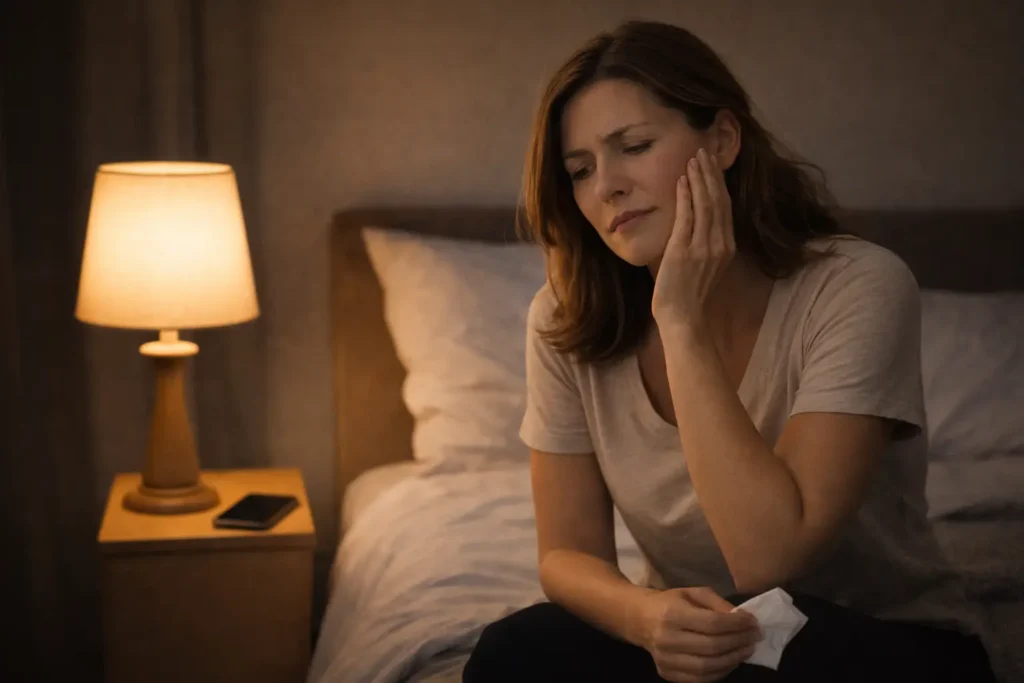
That heart-stopping moment. One second, everything is normal—a pickup game in the park, a child roughhousing on the couch, an accidental trip on the stairs. The next second, there’s shock, maybe some pain, and the stunning realization that a tooth is no longer where it should be. We get it. Your pulse is racing, and a wave of panic is probably washing over you. 😬
Take a deep breath. You’ve come to the right place.
We’re an educational team dedicated to translating complex dental situations into clear, calm guidance. We are not dentists, but we spend our time studying information from trusted sources to help you navigate moments just like this. And if you’re reading this with shaky hands and a million thoughts at once—that’s a very common worry, and it makes perfect sense. 💙
The single most important thing to know about a knocked-out tooth is that with quick, correct action, it can often be saved. ✨
This guide will walk you through exactly what to do, step by step. You are capable, and you can handle this. Let’s begin.
The First 30 Minutes Are Critical: Your Action Checklist
When a tooth is knocked out, a race against the clock begins. The goal is to protect the delicate living cells on the tooth’s root. Follow these steps immediately.
✅ Find the Tooth & Pick It Up Carefully
Handle the tooth by the crown (the white, shiny part you chew with), NOT by the root (the yellowish, pointed part). The root is covered in sensitive ligament fibers that are essential for reattachment.
If your brain feels foggy right now, that’s normal. 😊 In a stressful moment, people often grab the tooth like it’s a dropped key or a coin—without thinking. So here’s an easy mental shortcut: “White part only.” If you can remember that, you’re doing great.
✅ Gently Rinse, But Do NOT Scrub
If the tooth is dirty, rinse it gently for a few seconds with cold milk or a sterile saline solution. If neither is available, you can use the person’s own saliva. Do NOT use tap water, soap, or alcohol, and absolutely do not scrub or wipe the root. This can damage the very cells needed to save the tooth.
This part can feel counterintuitive because your instincts scream “clean it!” 😬 But for a knocked-out tooth, the goal is not “sparkling clean.” The goal is “still alive.”
✅ Try to Reinsert the Tooth (If Possible)
This is the best way to keep it viable. Carefully guide the tooth back into the empty socket. Once it’s in place, have the person bite down gently on a clean piece of gauze or a soft cloth to hold it steady. It might feel strange, but this gives it the highest chance of survival. ❤️
If you’re thinking, “That sounds impossible,” you’re not alone. That’s a very common reaction—and it makes perfect sense. 💬 A lot of people freeze right here. So here’s a calmer way to approach it: If it goes in easily, great. If it doesn’t, don’t fight it. Forcing it can make things worse.
✅ If You Can’t Reinsert It, Store It Properly
If reinserting the tooth isn’t possible, you must keep it moist. The best options, in order, are:
- A tooth preservation kit (like Save-A-Tooth).
- A small container of cold milk.
- The person’s own saliva (they can hold the tooth in their cheek, but be careful not to swallow it).
- As a last resort: A container of sterile saline solution. Do not store it in plain water.
Think of the tooth like a living tissue that can dry out fast—because that’s basically what it is in this situation. 🦷 The right storage buys you precious time.
✅ Get to an Emergency Dentist Immediately
Call a dentist right away. The chances of saving a knocked-out tooth are highest if it’s reimplanted within 30 to 60 minutes. Explain the situation clearly, letting them know you have the tooth and how you’ve stored it.
If you’re reading this while someone is searching for a phone number, you’re doing the right thing. 😊 Even a few minutes of calm, correct action can change the outcome.
🛑 Important Safety Stop: When It’s More Than Just a Tooth
We know the focus is on the tooth, but your overall health comes first. A dental injury is often part of a larger trauma. Please seek immediate medical attention at an emergency room if the person with the knocked-out tooth also has:
- Loss of consciousness, dizziness, or confusion (signs of a concussion).
- Uncontrolled bleeding from the mouth.
- A potential jaw fracture (the bite feels off, or the jaw is in severe pain).
- Trouble breathing or swallowing.
- Other serious facial injuries.
If you’re feeling torn—“Do I go to the ER or the dentist?”—that confusion is so common. 😬 And it makes perfect sense because everything is happening fast. When in doubt, safety first. Your well-being is the top priority. The dental work can be addressed once you are medically stable. 💙
Why Every Second Counts with a Knocked-Out Tooth
It’s natural to wonder why all these steps are so urgent. It all comes down to something called the Periodontal Ligament, or PDL. Think of the PDL as a tiny, living trampoline made of fibers and cells that hold your tooth in its socket. It’s what cushions your tooth when you chew and keeps it healthy and anchored in the jawbone.
When a tooth is knocked out, those delicate PDL cells on the root are severed from their blood supply. They immediately begin to dry out and die. 😥 Rinsing the tooth gently and putting it back in the socket (or in milk) is all about keeping those cells alive.
Here’s a simple picture to hold in your mind: imagine a small plant that gets pulled out of the soil. 🌱 If it sits dry on the counter, it wilts quickly. If you place it back into something moist right away, it has a fighting chance. That’s the vibe here.
If the PDL cells survive, a dentist can often successfully reimplant the tooth, and the ligament can heal and reattach to the bone. If the cells die, the body may reject the tooth, or the root may fuse directly to the bone (a condition called ankylosis), which can cause problems down the line. That’s why your quick action in the first hour is so incredibly powerful. You’re not just saving a tooth; you’re saving the living system that supports it. ✨
And if you’re thinking, “I didn’t know any of this five minutes ago,” that’s also incredibly normal. 😊 Most people only learn this after an accident. The fact that you’re here right now—learning and acting—is already a big win.
✨ Pro Insight from Our Research Team ✨
The ultimate goal when handling a knocked-out tooth is to preserve the viability of the Periodontal Ligament (PDL) cells on the root surface. These cells are the key to successful reattachment. Every action you take—from holding the tooth by the crown to storing it in milk—is designed to protect these microscopic, living tissues from drying out or being damaged. Think of it like first aid for a tiny, vital organ.
Navigating the First Hour: A Deeper Dive
Let’s expand on that initial checklist, because we know you might have more questions buzzing in your mind right now. It’s completely normal to feel a bit overwhelmed. 😊
Sometimes the hardest part of a dental emergency isn’t just the injury—it’s the mental chaos: Where is the tooth? Is it broken? Did they swallow it? Are we too late? 😬 If that’s you, take another breath. Let’s slow it down and walk through the most common “what ifs.”
What if I Can’t Get the Tooth Back In the Socket?
Don’t force it. Sometimes swelling, a blood clot, or pain makes it impossible to reseat the tooth properly. That’s okay! Your next best move is proper storage. This is where a simple table can help clarify your options.
| Storage Method | Why It Works | What to Do Now |
|---|---|---|
| 🦷 Save-A-Tooth Kit | Contains a pH-balanced solution (Hanks’ Balanced Salt Solution) that can keep PDL cells alive for hours. | Open the kit, place the tooth inside, and seal it. This is the gold standard if you have one on hand. |
| 🥛 Cold Milk | Milk has a similar fluid pressure (osmolarity) and pH to the tooth’s natural environment, keeping cells hydrated and alive. | Pour a small amount of cold milk into a clean container with a lid. Gently place the tooth inside. |
| ** saliva** | The person’s own saliva is a good, readily available option. It keeps the tooth moist and has the right chemical balance. | Have the person hold the tooth inside their cheek. Caution: This is only for older children and adults who won’t accidentally swallow it. |
| 💧 Saline Solution | A sterile saline solution (for contact lenses, for example) can work in a pinch. | Pour into a clean container and place the tooth inside. Avoid this if milk is an option. |
Remember, putting the tooth in plain tap water is a common mistake that can actually harm the root’s cells, so it should be avoided for storage.
If you’re stuck in a place with limited options—like a sports field, a hiking trail, or a car ride—milk is often the “surprisingly best” choice because it’s common and gentle. ☕ (And yes, it can feel weird to be thinking about milk while you’re panicking. That’s normal too.)
What if the Tooth Is Cracked or Dirty?
This worry shows up a lot: “What if it’s chipped?” “What if there’s sand on it?” “What if it fell in grass?” 😬
The key idea stays the same: don’t scrub the root. If the crown is dirty, a quick gentle rinse is okay—but avoid rubbing, scraping, or trying to “clean it like a dish.” The goal is gentle rinse + moist storage + fast dental care.
And if the tooth is in pieces? If it’s clearly shattered, you still want urgent dental care—but the steps may look different. In that situation, focus on safety (bleeding control, pain support, not swallowing fragments) and call an emergency dentist as soon as you can. 💙
What About a Knocked-Out Baby Tooth?
This is a really important distinction. If the knocked-out tooth is a primary (baby) tooth, do not try to reinsert it. We know this sounds counterintuitive, but trying to put a baby tooth back in can damage the permanent tooth that is developing in the jaw underneath it.
Instead, comfort your child, manage any bleeding with gentle pressure from a clean gauze, and call a pediatric or emergency dentist for guidance. They will want to see your child to ensure there’s no other damage to their mouth or jaw, but they will not reimplant the baby tooth. 🧸
And emotionally—this can feel awful for parents. ❤️ That “I should have prevented this” feeling is so common, and it’s heavy. But accidents happen fast. Your job now is not to blame yourself—it’s to respond calmly, and you’re doing that.
How to Find an Emergency Dentist for a Knocked-Out Tooth
Okay, you’ve secured the tooth. Now you need to find a professional, fast. This can be stressful, especially if it’s after hours or on a weekend.
That stress is real. 💬 A lot of people hit a wall here—not because they don’t care, but because they don’t know where to start. So here’s a simple, practical path:
- Call Your Regular Dentist First: Even if they are closed, their voicemail message will often provide instructions for dental emergencies or an on-call number.
- Search Online: Use terms like “emergency dentist near me,” “urgent dental care,” or “24-hour dentist.” Be specific with your location.
- Use a Dental Network Finder: For many people, navigating insurance or finding a local provider quickly is a huge challenge. Services that help you locate dentists in a network can be a lifesaver. If you need to find an urgent dentist quickly, platforms that show providers accepting specific plans can narrow down your search significantly. For example, some people use an online tool to Find a Dentist Near You That Accepts Dental Plan. This can help you find a pre-vetted office that might be able to see you right away.
It’s a good idea to have a plan before you even leave the house. Call the office to confirm they can handle this specific type of emergency and that they are ready for your arrival. 💬
If you’re calling and you feel your voice shaking, that’s okay. 😊 You can literally read this sentence to the front desk:
“A permanent tooth was knocked out. We have the tooth stored properly. We’re coming now.”
Micro-Guide: What to Bring to the Emergency Visit
Feeling scattered is normal. Grab a small bag and quickly gather these items:
- The knocked-out tooth (stored properly).
- Your ID and any dental insurance or discount plan information.
- A list of any current medications or allergies.
- Your phone and charger.
- If it’s for a child, a comfort item like a favorite blanket or toy.
Being prepared can help you feel a little more in control during a very out-of-control moment. 💙
What to Expect at the Emergency Dental Visit
Walking into a dental office for an emergency can be intimidating. Knowing what’s likely to happen can help ease some of that anxiety. While every case is unique, a dentist will typically follow a calm and methodical process.
First, they will focus on you or the person who was injured. They’ll ask questions about how the injury happened to rule out a concussion or other medical issues.
Next, the focus will turn to the tooth and the mouth. The dentist will likely:
- Gently Examine the Area: They will check the empty socket and surrounding gums and teeth for any other damage or fractures.
- Take an X-ray: This is crucial for seeing if there is damage to the jawbone, the socket, or the roots of neighboring teeth.
- Clean the Socket: If there is any debris or a blood clot, they will gently flush the socket with a saline solution to prepare it for the tooth.
- Reimplant the Tooth: The dentist will carefully place the knocked-out tooth back into its socket.
- Splint the Tooth: To keep the tooth stable while the ligament heals, the dentist will “splint” it to the neighboring teeth. This is a bit like putting a cast on a broken arm. The splint is usually a thin wire and a composite material bonded to the teeth, and it’s typically left in place for a couple of weeks.
If you’re picturing something dramatic or painful, pause for a second. 😬 A lot of emergency dental care is gentle and controlled. The goal is stability and protection, not “rough fixing.” And you can always ask: “Can you explain what you’re doing before you do it?” That’s a very reasonable request. 💬
The dentist will give you detailed aftercare instructions and will likely prescribe antibiotics to prevent infection. They may also discuss pain management options. Don’t be afraid to ask questions! ☕ You deserve to understand everything that’s happening.
After the Appointment: Caring for Your Replanted Tooth
Getting the tooth reimplanted is a huge victory, but the healing journey is just beginning. Proper aftercare is essential for giving the tooth the best possible chance of long-term success.
And if you’re feeling emotionally wiped out at this point—like you’ve been running on adrenaline for hours—that’s completely normal. 💙 Many people “crash” after the appointment because the emergency phase ends and reality sinks in. Be gentle with yourself.
Diet is Key: For the first week or two, you’ll need to stick to a soft-food diet. Think smoothies, yogurt, soup, mashed potatoes, and scrambled eggs. Avoid biting directly into anything hard or crunchy, like apples, nuts, or crusty bread. You want to give the tooth zero stress while the ligament fibers work to reattach.
Picture it like this: your tooth is trying to “settle back in,” like someone returning home after a storm. 🦷 It needs calm, stability, and time.
Gentle Oral Hygiene: Keeping your mouth clean is vital for preventing infection, but you’ll need to be very careful around the injured area. Your dentist will give you specific instructions, which may include:
- Using an extra-soft-bristled toothbrush to gently clean your other teeth.
- Avoiding brushing the injured tooth and splint directly for the first few days.
- Using a special antiseptic mouthwash to help keep the area clean.
- Avoiding flossing around the injured tooth until your dentist gives you the okay.
If brushing feels scary—like “What if I bump it?”—that fear is very common. 😬 And it makes perfect sense. Go slow. Use a mirror. Take breaks. The goal is clean and calm.
Follow-Up Is Not Optional: You will have follow-up appointments to check on the healing and eventually remove the splint. The dentist will also need to monitor the tooth’s nerve. In many cases, a reimplanted tooth will require a root canal treatment down the line, as the original nerve supply is often too damaged to recover.
This part can feel frustrating: “We saved it… and there’s still more?” 😥 Yes—and that doesn’t mean you failed. It means the tooth experienced a major injury, and ongoing monitoring is part of protecting your long-term outcome.
Did You Know?
The success rate for reimplanting a knocked-out permanent tooth is highest (up to 90%) when it’s done within the first 30 minutes. After two hours, the success rate drops significantly. Your quick action truly makes all the difference!
The Financial Side of a Dental Emergency
Let’s talk about something that often adds a layer of stress to an already difficult situation: the cost. 😥 An emergency dental visit, follow-ups, and potential root canals can be expensive, and it’s a cost nobody plans for.
If your stomach drops when you think about the bill, you’re not being dramatic. That’s a very real pressure—and it makes perfect sense. 💙 Dental emergencies are stressful even before money enters the conversation.
Here are a few grounding truths that can help you think clearly:
- You don’t have to solve the entire financial plan in the first hour. First: stabilize the situation. Then: ask about options.
- It’s okay to ask for an estimate and a phased plan. Many offices can explain what’s urgent today vs. what may be needed later.
- Follow-up care matters. Even if the tooth is reimplanted, the “long game” can include monitoring and additional procedures.
Feeling worried about this is completely valid. If you don’t have traditional dental insurance, it can feel even more daunting. This is where dental discount plans can sometimes help bridge the gap. These are not insurance, but rather membership programs that give you access to reduced prices on dental services from a network of participating dentists. It can be helpful to Compare The Dental Plans to see if a model like this could work for your family’s budget, especially for the follow-up care that will be required. Understanding how these plans work can provide a sense of control over the financial aspect of your dental health.
And emotionally? “Control” is a big deal here. 😊 When an accident happens, you lose control in seconds. So anything that helps you regain a plan—care plan, cost plan, next steps—can feel like relief.
If the Tooth Can’t Be Saved
Sometimes, despite everyone’s best efforts, a tooth cannot be saved. The damage might be too severe, or too much time may have passed before getting to a dentist. Hearing this news is disappointing, and it’s okay to feel sad or frustrated.
If you find yourself replaying the moment—“If only we had moved faster…”—that spiral is incredibly common. 😬 But please remember: you did the best you could with the information and reality you had in that moment. Emergencies don’t come with warning labels.
But please know, this is not the end of your smile. ❤️ Modern dentistry offers incredible, natural-looking solutions to replace a missing tooth. Options like a dental implant, a bridge, or a partial denture can restore both function and appearance. Your dentist will walk you through the best long-term solutions for your specific situation.
And if you’re worried about appearance—like, “How will I smile?”—that’s not shallow. 😊 It’s human. Smiles are part of identity, confidence, and comfort. It’s okay to care about that.
You Handled This. You Did Great.
A knocked-out tooth is one of the most jarring dental emergencies a person can experience. From that first moment of shock to the rush of finding help, it’s an emotional and physical whirlwind.
Remember the calm and capable person you were today. You took a scary, chaotic situation and handled it with purpose. You found the tooth, protected it, and sought help. That is a huge accomplishment. ✨
Our goal here is to empower you with clear, reliable information so you can face these moments not with panic, but with a plan. We hope this guide brought you a sense of clarity and calm when you needed it most. 💙
Medical Disclaimer: Content on BocaDentalUrgentCare.com is for educational purposes only and not a substitute for examination or diagnosis by a licensed dentist. If you experience pain, swelling, or urgent dental symptoms, seek professional care immediately.
Affiliate Disclosure: BocaDentalUrgentCare.com participates in affiliate programs (including discount plan partners, Amazon, and other trusted partners). When you buy through our links, we may earn a small commission — at no extra cost to you. These partnerships help keep our guides accurate, independent, and free for readers.
© 2026 BocaDentalUrgentCare.com | All rights reserved.