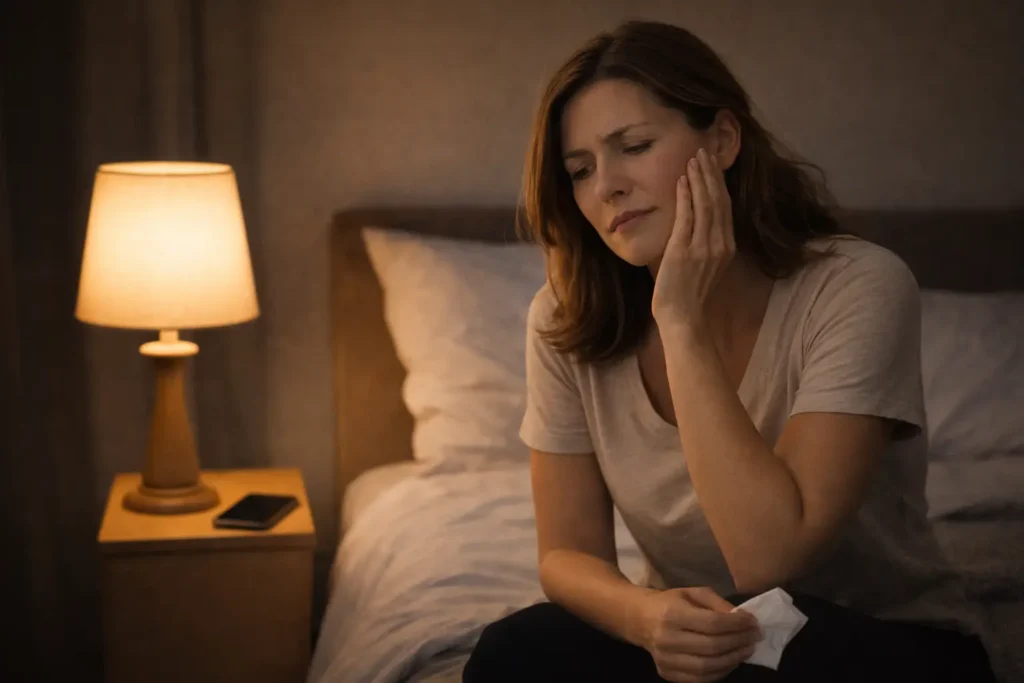
That sudden, heart-stopping moment. 😬 Whether it’s from a sports mishap, an unexpected fall, or biting down on something way too hard, the shock of an injury to your mouth is intense. One second, everything is fine; the next, you’re dealing with pain, maybe some bleeding, and a wave of panic. It’s a feeling many people know all too well, and it’s completely normal to feel overwhelmed.
Your mind starts racing. Is my tooth broken? Is this serious? What do I do right now?
Take a deep breath. You’re in the right place. We’re here to walk you through it, step-by-step. This guide is designed to cut through the confusion and give you clear, calm guidance on how to handle oral trauma.
We’re not dentists, and this isn’t medical advice. Think of us as your dedicated research team, here to translate expert recommendations into plain English so you can feel more in control. We’ll help you understand what’s happening, what your immediate next steps should be, and when it’s crucial to see a professional. Let’s get you on the path to feeling better. ❤️
And just to say it out loud: if you’re feeling shaky, frustrated, embarrassed, or even a little “why did this happen to me?” — that’s a very common reaction, and it makes perfect sense. 💬 Your mouth is sensitive, your smile feels personal, and dental surprises tend to hit fast. You don’t have to have all the answers right this second. We’ll go one calm step at a time. 😊
What Exactly Is Oral Trauma? (And Why It Feels So Scary)
You’ve probably heard the term, but what does oral trauma actually mean? Simply put, it’s an injury to your mouth—your teeth, gums, lips, tongue, or even your jaw. It’s a broad category that covers everything from a tiny chip on your front tooth to more serious injuries like a tooth getting knocked out completely.
It feels so frightening because our mouths are incredibly sensitive. They’re packed with nerves and blood vessels, which is why even a small injury can cause significant pain and bleeding, making it seem much worse than it might be. Plus, your smile is a huge part of your identity! An injury there feels deeply personal and urgent.
If you’re thinking, “But it’s just a tooth… why does this feel like such a big deal?” — that’s a very common worry, and it makes perfect sense. 😬 Teeth and gums are tied to eating, speaking, sleeping, and confidence. When something goes wrong there, it can feel like your whole day (or week) gets knocked off track.
Understanding the different types of trauma can help you assess the situation calmly:
- Chipped or Fractured Teeth: This is one of the most common forms of dental trauma.
- Dislodged (Luxated) Teeth: The tooth is still in the socket, but it’s been pushed out of position—sideways, forward, or backward.
- Knocked-Out (Avulsed) Teeth: The tooth has been completely knocked out of its socket. This is a true dental emergency.
- Soft Tissue Injuries: These are cuts, punctures, or bruises to your lips, gums, cheeks, or tongue.
One helpful mindset here is: you’re not trying to diagnose; you’re trying to stabilize. ✨ Your job in the moment is to protect the area, reduce bleeding and swelling, and get professional help if needed — especially if a tooth is loose, broken deeply, or missing.
No matter what you’re facing, the first step is always the same: try to stay calm and assess the situation safely. Panic makes it harder to think clearly. ✨
Red Flags: When Oral Trauma Needs Immediate Professional Help 🚩
Before we go any further, let’s cover the most important part: safety. While some minor injuries can be monitored, many types of oral trauma require immediate attention from a dentist. And in some cases, you may need to go to an urgent care center or the emergency room (ER).
If you’re sitting there wondering, “Am I overreacting?” — that’s a very common worry, and it makes perfect sense. ❤️ Dental pain and bleeding can look dramatic, and it’s hard to judge severity in the moment. When in doubt, it’s always okay to call and describe what happened. That’s not being dramatic — that’s being smart.
Seek urgent professional care from a dentist if you experience:
- A tooth that has been completely knocked out.
- A severely cracked, broken, or dislodged tooth.
- Nerve pain (a constant, throbbing ache deep inside the tooth).
- Uncontrolled bleeding from the mouth that doesn’t stop with gentle pressure.
- Signs of an infection, like a small pimple on the gum (a fistula), a bad taste in your mouth, or pus.
- Swelling in your gums or face.
It’s easy to think, “Maybe it will get better on its own,” but waiting can often make a simple problem much more complex. We know it’s stressful, but a quick call to a dental professional can save you a lot of pain and trouble down the road.
Here’s a little “real life” scene that might feel familiar: you look in the mirror, you see a chip, and your brain instantly goes to worst-case scenarios. 😬 But the reason dentists want to see injuries promptly isn’t to scare you — it’s because teeth can be tricky. A crack can be deeper than it looks. A “loose” tooth can stabilize better with early care. And swelling can change quickly.
Go to the ER or call 911 if you experience:
- Difficulty breathing or swallowing.
- A suspected broken jaw (you can’t close your mouth properly, or there’s severe pain and swelling).
- A deep cut that won’t stop bleeding.
- Swelling that is spreading rapidly, especially towards your eye or down your neck.
- Dizziness, memory loss, or a severe headache after a head injury.
Your overall health comes first. A dentist is the expert for your teeth, but the ER is the right place for life-threatening symptoms. 💙
And yes — it’s totally normal to feel torn here. “Do I call a dentist? Do I go to the ER? Do I wait?” That uncertainty is a very common reaction, and it makes perfect sense. 💬 If you have breathing/swallowing issues, major swelling spreading fast, or head injury symptoms, choose safety first (ER). If it’s primarily tooth/gum injury without those danger signs, an emergency dentist is usually the right next step.
Your First 30 Minutes After a Dental Injury: A Step-by-Step Checklist
Okay, the injury just happened. Your adrenaline is pumping. Let’s focus on the immediate actions that can make the biggest difference. Follow this micro-guide to navigate the first half-hour.
✅ Step 1: Find a Safe Space & Assess
Stop what you’re doing. Sit down and try to get a look at the injury in a well-lit mirror. If you’re with someone, ask them to help. Is there bleeding? Is a tooth loose, chipped, or missing?
If you can, do a quick “inventory” without poking around too much: teeth present, bite feels normal or off, pain sharp or dull, bleeding slow or heavy. The goal is clarity — not perfection. 😊
✅ Step 2: Control Bleeding
If there’s bleeding from your gums, lips, or cheeks, take a clean piece of gauze or a cloth and apply gentle, firm pressure to the area for 10–15 minutes. Don’t dab—hold it steady.
A lot of people panic because the mouth bleeds so easily. That’s a very common worry, and it makes perfect sense. 😬 Try to hold steady pressure, set a timer if you can, and avoid checking every 10 seconds — constant checking can keep the bleeding going.
✅ Step 3: Gently Rinse Your Mouth
Swish your mouth very gently with lukewarm salt water (about half a teaspoon of salt in a glass of water). This helps clean the area and can be soothing. Do not use mouthwash that contains alcohol, as it can sting and irritate the injury.
Think “gentle swirl,” not aggressive swish. If it hurts, go even softer. 💙
✅ Step 4: Manage Swelling
Apply a cold compress or an ice pack wrapped in a thin towel to the outside of your cheek or lip near the injured area. Do this for 15 minutes on, then 15 minutes off. This is a game-changer for reducing swelling and dulling the pain.
Imagine this: your cheek starts puffing up, your lip feels tight, and your brain goes, “Uh oh.” That’s a very normal moment. ❤️ Cold helps slow that swelling down and gives you back a little control.
✅ Step 5: Find Any Missing Pieces (If Applicable)
If a tooth or part of a tooth is missing, try to find it. Handle it very carefully (more on this below!). The ability to save a tooth often depends on what happens in this first hour.
If it’s a piece of tooth, you’re mostly bringing it so the dentist can evaluate shape and damage (and sometimes it can even be reattached). If it’s a whole tooth, the clock matters a lot. 🦷
✅ Step 6: Call a Dentist
This is the most critical step. Even if the pain seems manageable, call an emergency dentist right away. Describe what happened and what you’re seeing. They will give you specific instructions and tell you how soon you need to be seen.
If you’re calling while feeling embarrassed (“I can’t believe this happened”) — that’s a very common feeling, and it makes perfect sense. 💬 Dentists hear accident stories all the time. Sports, kids, ice cubes, popcorn kernels, stairs, car doors… you’re not alone.
Different Types of Oral Trauma and What to Do for Each
Every dental injury is unique. Here’s a closer look at the most common types of oral trauma and the specific actions you can take for each one while you arrange to see a dentist.
One quick note before we dive in: you don’t need to read this perfectly in order to benefit. 😊 If you know what happened (knocked-out tooth, cracked tooth, loose tooth), jump to that section and focus on the immediate steps.
A Knocked-Out Tooth (Avulsed Tooth)
This is a top-tier dental emergency where time is absolutely critical. If you act fast, there’s a good chance a dentist can successfully reimplant the tooth.
If you’re feeling that “oh no, I’m going to faint” moment — that’s a very common reaction, and it makes perfect sense. 😬 This is one of those situations where a simple, calm checklist helps more than frantic guessing.
- Find the tooth. Pick it up by the crown (the white chewing part), NOT by the root. The root has delicate cells that are vital for reattachment.
- Clean it gently. If the tooth is dirty, rinse it for a few seconds with milk or a saline solution. Do NOT use soap, scrub it, or wrap it in a tissue.
- Try to put it back in the socket. This is the best way to preserve it. If it goes in, gently bite down on a clean cloth or gauze to hold it in place.
- If you can’t replant it, keep it moist. Do not let it dry out! Place it in a small container of milk or an emergency tooth preservation product (like Save-A-Tooth). Your own saliva can also work in a pinch, but milk is better. Do not use plain water.
- See a dentist immediately. Ideally within 30–60 minutes. The sooner you get there, the higher the chance of saving the tooth.
A quick “picture this” moment: you’re holding the tooth, your hands are shaking, and your brain is screaming, “What do I DO with this?!” 💬 The big rule is simple: don’t touch the root and don’t let it dry out. That’s it. Everything else is just supporting that goal.
And if replanting it yourself feels scary — that’s understandable. ❤️ Some people can do it, some can’t, and it depends on the situation. If you can’t, it doesn’t mean you failed. It means you chose the next best option (keeping it moist and getting to a dentist fast).
A Chipped, Cracked, or Broken Tooth
Even a small chip can have a sharp edge that irritates your tongue or cheek. A deeper crack can expose the sensitive inner layers of the tooth, causing pain.
- Rinse your mouth with warm salt water.
- Find the broken piece, if you can. Bring it with you to the dentist.
- Apply a cold compress to your face to reduce any swelling or pain.
- Cover the sharp edge if it’s bothering you. You can use a small piece of sugar-free gum or temporary dental wax (available at most pharmacies) as a temporary shield.
- Call your dentist. A minor chip might not be an immediate emergency, but a deep crack or break definitely is. They’ll tell you how urgently you need to come in.
For a deeper dive into this common issue, our guide on what to do for a broken tooth can provide even more detail and comfort.
Here’s a calming thought if you’re staring at a crack and spiraling: that fear is a very common worry — and it makes perfect sense. 😬 The mouth is high-stakes emotionally. But many broken-tooth situations are treatable. The key is getting it evaluated before it turns into bigger pain or infection risk.
A couple of gentle “do nots” while you wait:
- Don’t chew on that side (even if it “kind of” feels okay).
- Don’t test the crack by tapping it repeatedly (it’s so tempting — we get it).
- Avoid extreme temperatures if you have sensitivity (ice water can feel like lightning). ⚡
And if the tooth looks normal but you feel sharp pain when biting? That can still be meaningful. Sometimes cracks are sneaky. Calling is still worth it. 💙
A Dislodged or Loose Tooth (Luxated Tooth)
This happens when a tooth is still in its socket but has been knocked crooked or feels loose. It might be pushed back, forward, or to the side.
- Don’t wiggle it. Resist the temptation to push it around with your tongue or finger.
- Try to gently reposition it. Using very light finger pressure, you can try to move it back to its normal alignment. Don’t force it.
- Bite down gently to keep it from moving.
- Call a dentist right away. A dislodged tooth needs to be stabilized by a professional to prevent it from being lost.
If you’re thinking, “It’s still there, so maybe it’s fine?” — that’s a very common thought, and it makes perfect sense. 😊 But loose teeth can be fragile right after trauma. Early stabilization can make a real difference.
Picture biting into a soft sandwich and feeling your tooth shift slightly — it’s such an unsettling feeling. 😬 The best thing you can do is keep pressure minimal, stick to soft foods, and get professional guidance quickly.
Cuts, Bites, and Soft Tissue Injuries (Lips, Gums, Cheeks)
These injuries often look dramatic because they can bleed a lot, but they frequently heal well.
- Clean the area by gently rinsing with a saltwater solution.
- Apply firm, direct pressure with a clean cloth or gauze to stop the bleeding.
- Use a cold compress to minimize swelling and bruising.
- Check for tooth damage. Often, a cut lip or cheek is caused by a broken or sharp tooth. Make sure there isn’t an underlying dental injury.
- If bleeding is severe or doesn’t stop after 15 minutes of pressure, it’s time to head to an urgent care clinic or the ER.
And yes — it’s normal to see a cut and immediately think it’s “worse than it is.” That’s a very common worry, and it makes perfect sense. ❤️ Mouth tissue can look intense when injured. The key signals to respect are: bleeding that won’t stop, deep cuts that gape open, or injuries paired with head trauma symptoms.
| Type of Oral Trauma | What It Looks Like | Your Immediate Action Plan |
|---|---|---|
| Knocked-Out Tooth | Tooth is completely out of the socket. | Find tooth (hold by crown), rinse gently with milk, try to replant. If not, store in milk. See dentist within 1 hour. 🦷 |
| Broken/Cracked Tooth | A piece is missing, a sharp edge, or a visible crack line. | Rinse with warm water, find the piece, use a cold compress. Cover sharp edges with dental wax. Call dentist for advice. |
| Dislodged Tooth | Tooth is loose, pushed back, or out of alignment. | Gently try to reposition with light finger pressure. Bite down softly to hold it. See dentist same day. |
| Cut Lip/Cheek/Gum | Laceration, puncture, or tear in the soft tissue. | Rinse gently, apply firm pressure with clean gauze to stop bleeding, use a cold compress. See dentist/doctor if bleeding is severe. |
Pro Insight From Our Team 💡
When it comes to dental injuries, especially a knocked-out tooth, we often talk about the “golden hour.” Research shared by dental associations shows that the first 60 minutes after an injury are the most critical for the survival of the cells on the tooth’s root. Keeping those cells alive by storing the tooth properly (ideally back in the socket or in milk) dramatically increases the chances that a dentist can save it. Staying calm and acting quickly within this window can truly make all the difference.
Navigating Pain and Swelling Safely at Home (While You Wait)
You’ve called the dentist, and your appointment is in a few hours or the next morning. Now what? Managing your discomfort safely is key. The goal here is to find temporary relief, not to “fix” the problem yourself.
If you’re feeling impatient (“I need this to stop hurting now”) — that’s a very common feeling, and it makes perfect sense. 😬 Dental pain can be distracting in a very primal way. The trick is to focus on comfort steps that reduce inflammation and protect the area until you’re seen.
Safe At-Home Comfort Measures:
- Cold Compress: As we mentioned, this is your best friend. The cold helps constrict blood vessels, which reduces swelling, inflammation, and pain signals. Remember: 15 minutes on, 15 minutes off.
- Saltwater Rinse: A gentle swish with warm salt water a few times a day helps keep the area clean and can reduce irritation. It’s a simple, effective way to promote a cleaner environment in your mouth.
- Over-the-Counter Pain Relievers: Medications like ibuprofen (Advil, Motrin) or acetaminophen (Tylenol) can help manage the pain. Ibuprofen is often preferred for dental pain as it also targets inflammation. Always follow the package directions and make sure it’s safe for you to take.
- Eat Soft Foods: Stick to liquids, yogurts, smoothies, and soups. Avoid chewing on the injured side of your mouth. The last thing you want to do is put more stress on a damaged tooth. ☕
- Elevate Your Head: When you rest or sleep, try propping your head up with an extra pillow. This can help reduce throbbing and swelling.
A few extra “small but powerful” comfort ideas (still just comfort, not treatment):
- If hot or cold triggers pain, keep drinks lukewarm for now. 💙
- Avoid crunchy foods even if you’re hungry (chips and crusty bread are the usual sneaky villains).
- If your jaw feels sore, try to keep talking minimal for a bit — it can reduce strain. 💬
Some people might be tempted to use a temporary dental filling kit from a pharmacy, especially for a broken tooth. While these can sometimes cover a sharp edge temporarily, they are not a substitute for professional care. If you consider one, you can find options on sites like Amazon.com, but please understand this is only a bridge to your dental appointment, not a repair. Always see a dentist to have the injury properly assessed and treated.
If you’re thinking, “I just need something — anything — to get through tonight,” that’s a very common worry, and it makes perfect sense. ❤️ The “bridge” mindset is helpful: temporary measures can make you more comfortable, but the real goal is still evaluation and professional treatment.
| Home Relief (Temporary) | Professional Dental Care (Solution) |
|---|---|
| ✅ Applying a cold compress to your cheek. | ✅ Diagnosing the extent of the injury with an X-ray. |
| ✅ Rinsing with warm salt water. | ✅ Professionally cleaning and treating the wound or tooth. |
| ✅ Taking approved OTC pain medication. | ✅ Placing a permanent filling, crown, or bonding. |
| ✅ Eating soft foods to avoid pressure. | ✅ Splinting a loose tooth to stabilize it. |
| ✅ Using temporary dental wax on a sharp edge. | ✅ Re-implanting a knocked-out tooth or performing a root canal. |
Remember, home care is about managing symptoms. Only a dentist can provide the solution. 😊
Finding an Emergency Dentist: Your Next Crucial Step
Knowing you need a dentist is one thing; finding one who can see you quickly is another. This can be one of the most stressful parts of dealing with oral trauma, especially if it happens after hours or on a weekend.
If you’re feeling stuck in that “I don’t even know where to start” spiral — that’s a very common worry, and it makes perfect sense. 😬 In urgent moments, your brain wants a single clear path. So here’s a calm, practical approach that works for most people.
Here are a few trusted ways to find help:
- Call Your Regular Dentist First: Even if it’s after hours, their voicemail may provide instructions for emergencies, including a number for an on-call dentist or a recommended emergency clinic.
- Use an Online Search: Searching for “emergency dentist near me” or “urgent dental care” is a great starting point. Be sure to call the office to confirm they can handle your specific type of injury and see you promptly.
- Check with Local Dental Societies: Many state or local dental associations have referral services for dental emergencies.
- Use a Dental Network Finder: If you have a dental plan or a discount plan, they often have tools to help you locate a provider. For example, some people use online directories to find a dentist quickly. If you need a place to start, services like 1Dental-dentists can help you find a local dentist that accepts specific plans.
When you call, be ready to describe what happened, the location of the injury, and your symptoms. The more information you can provide, the better they can assist you. For more tips on this process, you can explore our guide on finding an emergency dentist.
Here’s a simple script you can literally read off your phone (no pressure to memorize):
- “Hi, I had a dental injury and I’m looking for urgent dental care.”
- “My tooth is [knocked out / cracked / loose / painful when biting].”
- “There is [bleeding / swelling / throbbing pain].”
- “This happened about [30 minutes / 2 hours] ago.”
- “Can you see me today or advise where I should go?”
If you’re worried you’ll “say it wrong” on the call — that’s a very common worry, and it makes perfect sense. 💬 You don’t need perfect terminology. You just need to describe what you see and what you feel.
We know that an unexpected dental visit can also bring up financial worries. It’s a valid concern that stops many people from seeking care. If the cost of treatment is on your mind, it might be helpful to learn about different options ahead of time. Understanding how things like dental discount plans work can provide peace of mind. Some people find that comparing dental plans offers a way to manage costs for both urgent and routine care. You can explore a resource like Compare The Dental Plans – 1Dental to see if a plan might be a good fit for you in the future.
And just to validate this part: “I’m scared of the bill” is a very real reason people hesitate. ❤️ That’s not irrational — it’s practical. Even if you still choose to get care (and often you should), knowing there are cost-saving options can reduce that “I’m trapped” feeling.
You’ve Got This: Moving Forward After Oral Trauma
Dealing with an injury to your mouth is jarring and emotional, but you are more than capable of handling it. By staying as calm as possible, taking the right immediate steps, and seeking professional help, you give yourself the best possible chance for a smooth and successful recovery.
Let’s recap the core message: assess the situation, control any bleeding or swelling, preserve a knocked-out tooth if necessary, and call a dentist without delay. Your quick thinking and calm actions in the first hour after oral trauma can make a world of difference.
If you’re reading this while still in the middle of the stress — shaky hands, sore mouth, racing thoughts — take one more slow breath. 💙 That’s a very common moment, and it makes perfect sense. You don’t need to “be brave” in some perfect way. You just need to follow the next right step.
You’ve taken a great first step by educating yourself. Now, take the next one and get the professional care you need. You’re on your way to putting this behind you. ✨
Medical Disclaimer: Content on BocaDentalUrgentCare.com is for educational purposes only and not a substitute for examination or diagnosis by a licensed dentist. If you experience pain, swelling, or urgent dental symptoms, seek professional care immediately.
Affiliate Disclosure: BocaDentalUrgentCare.com participates in affiliate programs (including discount plan partners, Amazon, and other trusted partners). When you buy through our links, we may earn a small commission — at no extra cost to you. These partnerships help keep our guides accurate, independent, and free for readers.
© 2026 BocaDentalUrgentCare.com | All rights reserved.