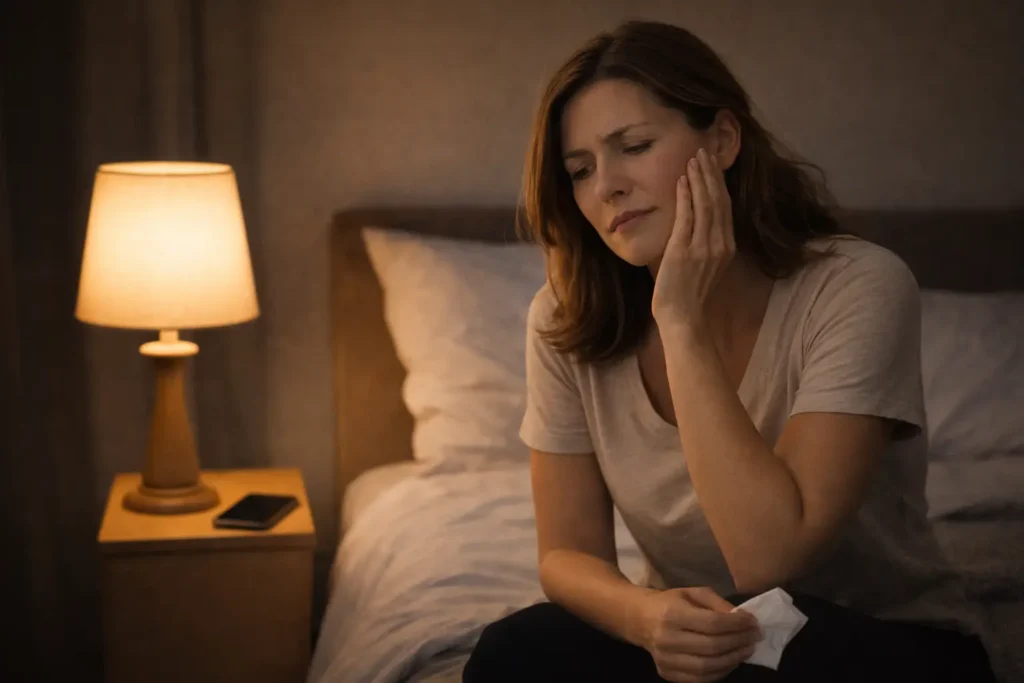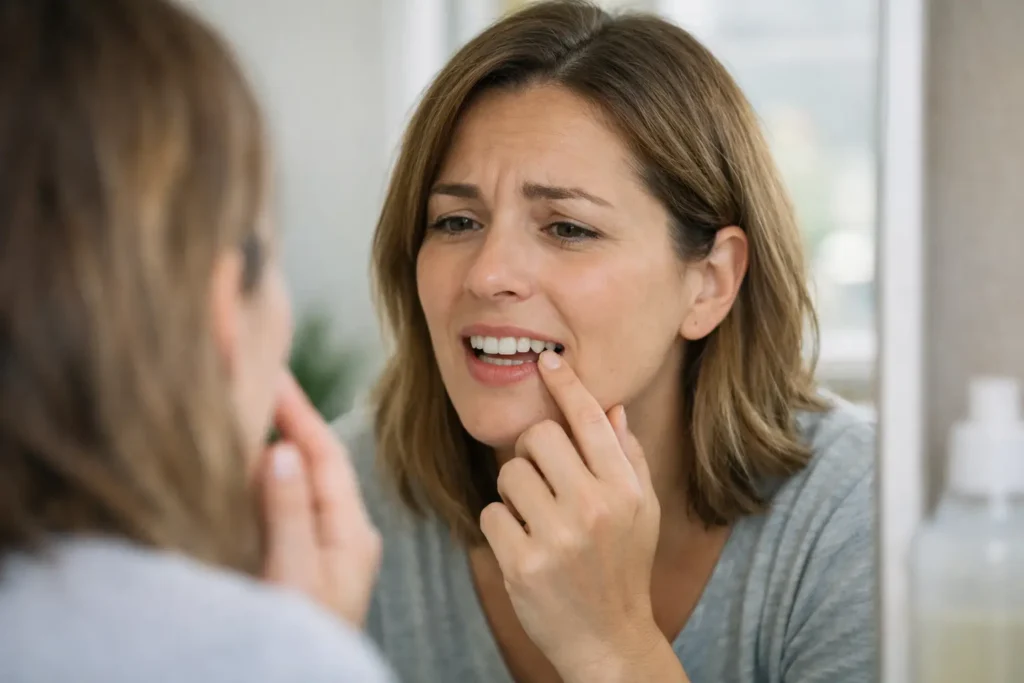
It happens in an instant. A crunch on a stray popcorn kernel, an unexpected elbow during a game, or a clumsy trip on the sidewalk. Suddenly, you feel a sharp, jagged edge in your mouth where a smooth tooth used to be. That heart-sinking moment is often followed by a wave of panic. What just happened? Is it serious? What do I do now? 😬
If you’re feeling anxious, you’re not being dramatic. That’s a very common reaction — and it makes perfect sense. A broken / chipped tooth can feel urgent because it changes your mouth instantly. Your tongue keeps finding the sharp spot. Your brain starts running worst-case scenarios. And if there’s any pain at all, it’s hard to think about anything else. 💙
Take a slow breath. ❤️ You’re not alone in this — and you don’t have to guess your way through it. This guide is here to translate the situation into calm, plain-English steps so you can protect the tooth, manage discomfort, and know when you need urgent help.
We’re not dentists, but we are passionate about providing the educational tools you need to make the best next decision for your smile. Think of this as your “steady hand on the shoulder” guide — what to do first, what not to do, and how to get to the right kind of care. ✨
And yes, even if the chip looks “small,” it can still matter. Not because everything is a crisis — but because early action often keeps a simple problem from turning into an expensive, painful one later. That’s a very common worry too, and it’s exactly why you’re doing the right thing by reading this now. 🦷
Your First 30 Minutes: A Step-by-Step Action Plan
When you’re dealing with a broken / chipped tooth, the immediate moments after can feel chaotic. Your first instinct might be to panic, but a few calm, deliberate actions can make a huge difference. Let’s focus on what you can control right now.
Here’s a helpful mental picture: imagine you just cracked your phone screen. Even before you decide whether to repair or replace it, the first move is to stop it from getting worse — keep it clean, avoid pressure, and get it assessed. Teeth are similar. You’re trying to stabilize the situation until a professional can evaluate it. 😊
Here is a simple checklist to follow immediately after chipping or breaking a tooth:
✅ Your Calm-Down Checklist: What to Do Right Now
- Gently Rinse Your Mouth: Swish your mouth carefully with warm salt water (about half a teaspoon of salt in a glass of warm water). This helps clean the area, remove any small tooth fragments, and can reduce the risk of infection. Avoid aggressive swishing. 🦷
That gentle part matters. If you’re stressed, it’s easy to rinse too forcefully — but you don’t want to irritate your gums or push debris into sensitive areas. - Find and Save the Piece(s): If you can find the broken piece of your tooth, save it! Place it in a small, clean container with a bit of milk or your own saliva. This keeps it from drying out. In some cases, a dentist might be able to reattach the fragment. No milk? A small container with a damp paper towel will work in a pinch.
If you can’t find the piece, don’t panic — that’s extremely common. Sometimes it’s tiny. Sometimes it breaks into multiple fragments. Sometimes it’s swallowed. The priority is your safety, not playing detective. - Control Any Bleeding: Is there any bleeding from your gum tissue? If so, take a clean piece of gauze or a damp tea bag and apply gentle, steady pressure to the area for about 10-15 minutes. The tannins in tea can help constrict blood vessels and slow bleeding.
And if your mind jumps straight to “This must be really bad,” take a breath — small mouth injuries can bleed more than you’d expect because the tissues are very vascular. It can look dramatic even when the injury is manageable. ❤️ - Manage Swelling: If you experienced trauma to your face (like a fall or a hit), you’ll likely have some swelling. Apply a cold compress or an ice pack wrapped in a thin towel to your cheek or lip over the affected area. Do this in 20-minute intervals (20 minutes on, 20 minutes off) to help reduce swelling and numb the pain. 🧊
Picture it like spraining an ankle: cold helps calm the inflammation early on. It’s one of the simplest things you can do that actually helps. - Assess the Pain: Take a moment to gauge your pain level. Is it a sharp, sensitive zing when air hits it, or is it a deep, throbbing ache? This information will be helpful when you call a dental professional. If you are able and it’s safe for you to do so, you can consider an over-the-counter pain reliever like acetaminophen or ibuprofen.
That’s a very common worry — “What if I can’t describe it right?” — but you don’t need perfect words. Even something like “cold hurts” or “it’s fine unless I bite down” is genuinely useful. 💬 - Make a Call: This is the most important step. Even if the chip seems minor and doesn’t hurt, it’s crucial to have it evaluated. Call a dentist’s office to explain what happened and schedule an appointment. They can tell you how urgently you need to be seen. 📞
If it’s after hours, don’t assume you’re stuck. Many offices have an emergency line, and urgent dental clinics exist for exactly this scenario.
We know this is a lot to remember when you’re stressed. The key is to stay as calm as possible and work through these steps one by one. You’ve got this. 💙
One more small reassurance: it’s normal if you feel “shaky” after it happens — like your body is still catching up. That’s a classic stress response. The checklist above gives you something steady to do while your nervous system settles.
How Serious Is It? Understanding the Damage
Not all breaks are created equal. The urgency and type of treatment you’ll need depend heavily on how severe the damage is. While only a licensed dentist can diagnose the extent of the break, understanding the general categories can help you communicate what you’re experiencing.
A tooth isn’t just a solid block; it has layers. The hard, white outer layer is the enamel. Beneath that is a softer, yellowish layer called dentin. And at the very center is the pulp, which contains the tooth’s nerves and blood vessels. Damage to different layers causes different problems.
That’s a very common surprise: people assume “a tooth is just a tooth,” but it’s more like a layered structure. And when the deeper layers get exposed, that’s when sensitivity and pain can ramp up fast. 😬
Think of it this way:
- Minor Chip (Enamel Only): This is often a cosmetic issue. You might feel a rough edge with your tongue, but there may be little to no pain. It’s still important to get it smoothed or repaired to prevent further chipping or irritation to your tongue and cheek. 😊
Even without pain, a rough edge can act like a tiny “weak spot.” Repeated pressure from chewing can make the chip slowly grow over time — not always, but often enough that it’s worth addressing. - Moderate Chip/Crack (Envolving Dentin): If the break goes through the enamel and exposes the dentin, you’ll likely feel sensitivity to hot, cold, or air. The tooth might look yellowish where it’s chipped. This needs more prompt attention to protect the tooth from decay and further damage.
Picture drinking cold water and feeling that quick electric “zing.” That’s the kind of sensitivity people often describe here — and yes, it can be startling. - Severe Break (Exposing the Pulp): This is the most serious and painful type of fracture. If the break is deep enough to expose the pulp, it can be intensely painful. The pulp is living tissue, and exposing it to bacteria in your mouth can quickly lead to infection. This situation is a clear dental emergency. 🚑
If you’re reading this and thinking, “I’m scared that’s me,” that fear is very common — and it makes perfect sense. The good news is: urgent dental teams deal with this all the time, and the goal is to get you out of pain and protect the tooth. - Cracked Tooth: Sometimes, a tooth develops a crack that isn’t immediately obvious. It might not even hurt unless you bite down in a specific way. These are tricky and require a dentist’s evaluation to prevent the crack from spreading and potentially splitting the tooth.
This is one of those situations where people feel confused (“Why does it only hurt sometimes?”). You’re not imagining it — cracks can behave exactly like that.
Many people find it helpful to see the potential signs and next steps laid out clearly.
| Symptom You Feel/See | What It Might Mean | Your Immediate Next Step |
|---|---|---|
| A small, rough edge; no pain. | Minor Chip: Likely just the outer enamel layer. | Call a dentist for a non-urgent appointment to smooth or bond it. |
| Sharp sensitivity to air, hot, or cold. | Moderate Chip/Crack: The dentin layer is likely exposed. | Call a dentist for a prompt appointment (ideally within 24-48 hours). |
| Intense, throbbing, or constant pain. | Severe Break: The pulp (nerve) is likely exposed. | This is a dental emergency. Call for an immediate appointment. |
| Pain only when you bite down. | Cracked Tooth: A fracture line might be present. | Avoid chewing on that side and call a dentist for an evaluation soon. |
Remember, this table is just for educational guidance. A professional examination is the only way to know for sure what’s happening inside your tooth.
And here’s one more gentle truth: it’s okay if you can’t tell which category you’re in. Most people can’t. Your job is not to diagnose — your job is to protect the tooth and get it assessed. That’s it. ❤️
When a Broken / Chipped Tooth Becomes a Real Emergency
It’s completely normal to wonder, “Do I need to rush to a dentist right now?” While any broken tooth deserves professional attention, some symptoms are red flags that point to a more serious problem, like an infection. An infection in your tooth or gums can spread, and that’s when a dental issue can become a medical one.
That’s a very common worry — and honestly, it’s a smart question. You’re not overreacting by wanting to know the line between “urgent” and “wait until tomorrow morning.” 💙
Seek immediate professional dental care if you experience any of these warning signs along with your broken tooth:
- Severe, Throbbing Pain: Pain that is constant, unbearable, and not managed by over-the-counter medication.
If your body can’t “settle” the pain even when you’re resting, that’s a strong sign you need urgent evaluation. - Facial Swelling: Noticeable swelling in your cheek, jaw, or around your eye.
Swelling is one of those signs that makes people instantly nervous — and that reaction makes perfect sense. Swelling can indicate inflammation or infection, and it deserves fast attention. 😬 - Fever: A broken tooth accompanied by a fever is a classic sign that your body is fighting an infection.
- Pus or a “Pimple” on the Gum: A small, pimple-like bump on your gum near the painful tooth (called a fistula) is a sign of a dental abscess, which is a pocket of pus from an infection.
- A Bad Taste or Smell in Your Mouth: A persistent salty, foul taste can be caused by pus draining from an abscess.
This is a very common “I wasn’t sure if it mattered” symptom — but it does matter, because it can be a clue that infection is present. - Swollen Glands: Tender or swollen lymph nodes under your jaw or in your neck.
- Trouble Swallowing or Breathing: This is a medical emergency. If swelling spreads to your neck and affects your ability to swallow or breathe, go to the nearest hospital emergency room immediately.
These symptoms often point to a dental abscess, which is a serious infection that requires urgent treatment from a dentist. Ignoring it can lead to the infection spreading to other parts of your body. Your health is the number one priority, so please take these signs seriously. 📞
If you’re stuck in that “Should I go now?” loop, here’s a calming way to think about it: pain + swelling + fever is not a wait-and-see combo. If you have any of those red flags, getting help sooner is the safer path. ❤️
How to Manage Pain and Protect Your Tooth Until You See a Dentist
Let’s say you broke a tooth on a Friday night, and the earliest you can get an appointment is Monday morning. What can you do in the meantime to stay comfortable and protect the damaged tooth? Your goal is to manage discomfort and prevent the situation from getting worse.
That’s a very common worry — weekends and late nights are when dental issues love to show up. 😬 So let’s make those hours in-between feel a lot more manageable.
- Stick to Soft Foods: Avoid anything hard, crunchy, or chewy. Biting down on the damaged tooth can cause it to fracture further or create intense pain. Think smoothies, yogurt, soup, and mashed potatoes. ☕
If you want a simple rule: if it makes a “crunch” sound, skip it for now. - Avoid Extreme Temperatures: A broken tooth with exposed dentin or pulp can be incredibly sensitive. Try to consume lukewarm foods and drinks to avoid triggering sharp pains.
This can feel frustrating (“So I can’t even enjoy coffee?”), and that frustration is totally understandable. If you do have coffee, letting it cool a bit can make a surprising difference. 💙 - Be Gentle When Brushing: Continue to practice good oral hygiene, but be extremely gentle around the broken tooth. You don’t want to cause more irritation.
And yes — you still want to keep the area clean. People sometimes stop brushing near the tooth because they’re scared, but plaque and bacteria don’t take a break when you’re stressed. - Use Dental Wax or Temporary Filling Material: If the broken edge is sharp and cutting your tongue or cheek, you can cover it. You can use a small piece of sugar-free gum in a pinch, but a better option is a temporary dental filling material available at most pharmacies. This can provide a smooth surface and help seal the tooth from sensitivity. 🦷
Imagine trying to sleep while a sharp edge keeps scraping your tongue — that’s miserable. Smoothing or covering the edge can bring real relief. - Sleep with Your Head Elevated: If you’re experiencing a throbbing ache, propping your head up with an extra pillow at night can help reduce some of the pressure and pain.
Here are a few extra “tiny but helpful” protective moves people often forget:
- Don’t chew on the broken side. Even if it feels “okay,” sudden pressure can turn a small chip into a bigger fracture.
- Avoid sticky foods (caramels, chewy candy) — they can pull on damaged areas.
- If the tooth is very sensitive to air, keeping your lips closed over it and breathing through your nose can reduce that “zing.” It sounds small, but it can help in the moment. 😊
For those looking for temporary solutions, you can sometimes find items like a Temporary Tooth Repair Kit online. These kits can provide a short-term fix to cover a sharp edge or fill a gap. If you consider this route, you can often find options on platforms like Amazon.com. However, please remember: this is a temporary band-aid, not a cure. It is never a substitute for professional dental care.
Pro Insight: The Goal is Always to Save the Tooth
When you see a dentist, their primary goal will almost always be to save your natural tooth. Modern dentistry has incredible tools and techniques to repair damage and restore function. From simple bonding to more complex procedures like crowns or root canals, there are many ways to fix a broken / chipped tooth. That’s why getting it checked out quickly is so important—it gives a dental professional the best possible chance to save the tooth and prevent the need for an extraction.
If you’re feeling overwhelmed by all the possibilities, that’s very common — and it makes perfect sense. ❤️ The important part is this: most broken / chipped teeth can be helped, and you’re taking the right steps by protecting it now and getting it evaluated soon.
Finding the Right Professional for Your Broken / Chipped Tooth
Okay, you’ve managed the immediate situation. Now it’s time to find the right help. If you have a regular dentist, that’s your first call. They know your history and can often make time for emergencies.
But what if you don’t have a dentist? Or what if it’s after hours or on a weekend? Many people in this situation start looking for an “emergency dentist” or an “urgent dental clinic.” These offices are specifically equipped to handle situations just like yours.
That’s a very common situation — especially if you’ve moved recently, changed insurance, or you’re the type of person who only sees a dentist when something goes wrong (no judgment… that’s so common). 😊
A great way to start is by using an online search tool to locate a professional in your area. If you’re trying to find a dentist quickly, services that connect patients with providers can be incredibly helpful. For instance, if you need to Find a Dentist Near You That Accepts Dental Plan, a directory can simplify the process significantly. It helps you filter by location and see who might be available to help.
When you call an office, be ready to provide clear information:
- Which tooth is broken?
- How did it happen?
- Are you in pain? How would you rate it on a scale of 1-10?
- Are you experiencing any of the red flag symptoms like swelling or fever?
This helps the dental team understand the urgency of your situation and advise you on what to do next. For more detailed tips on this process, our guide on what to do when you have a severe toothache at night offers additional insights that are very relevant here.
Here’s a quick “calm script” you can literally use on the phone (because yes — forgetting what to say is a very common worry 😬):
- “Hi, I chipped/broke a tooth today.”
- “It happened when I (bit down / fell / got hit).”
- “I have (no pain / sensitivity / throbbing pain).”
- “I also have (swelling / no swelling).”
- “What’s the soonest I can be seen?”
You don’t need to sound confident. You just need to communicate the basics. 💬
What to Expect at the Dentist’s Office
Walking into a dental office for an emergency can be intimidating, but knowing what to expect can ease some of that anxiety. A dentist will typically start by assessing the situation.
That anxious feeling is incredibly common — especially if your last dental memory involves a surprise bill, a stressful procedure, or just the general “I don’t love this” vibe that many people associate with dentistry. You’re not alone. ❤️
- Discussion and Examination: They’ll ask you about what happened and your symptoms. Then, they’ll perform a gentle visual examination of the tooth.
They’re usually looking for things like: how big the chip is, whether the edge is unstable, and whether the tooth looks like it has deeper structural damage. - X-ray: An X-ray is almost always necessary. It allows the dentist to see what’s going on beneath the surface, checking for damage to the root of the tooth and the surrounding bone.
Even if the chip looks small, the X-ray helps rule out hidden problems — and that peace of mind matters more than people realize. 😊 - Diagnosis and Options: Once they have a clear picture, they will explain the extent of the damage and present you with treatment options.
A good office will also explain why they’re recommending something — not just what they want to do.
The treatment for a broken or chipped tooth varies widely based on the severity. Here’s a simple breakdown of the most common solutions.
| Type of Damage | Common Treatment | What It Does |
|---|---|---|
| Small Chip | Dental Bonding | A tooth-colored resin is applied to the tooth, sculpted into shape, hardened, and polished. It’s a fast and effective cosmetic fix. |
| Larger Chip / Front Tooth | Porcelain Veneer | A thin, custom-made shell of porcelain is bonded to the front of the tooth to restore its appearance and shape. |
| Large Break / Cusp Fracture | Dental Crown (Cap) | A custom-made cap that covers the entire tooth, providing strength, protection, and restoring its original shape and function. |
| Break Exposing the Pulp | Root Canal Therapy | The damaged or infected pulp is removed, the inside of the tooth is cleaned and sealed, and the tooth is then typically restored with a crown. |
Don’t let these terms scare you! A good dental team will explain everything clearly, answer your questions, and make sure you’re comfortable throughout the process. Their job is to get you out of pain and restore your smile. ✨
If you want to feel even more grounded, here are a few questions you can ask that keep things clear and calm (because feeling “in control” is a very common need in urgent situations 💙):
- “Is this mostly cosmetic, or is the tooth structurally weakened?”
- “What happens if I wait a week?”
- “Is there a temporary option if I need time to plan the cost?”
- “What should I avoid eating until it’s fixed?”
Again — you don’t have to ask all of them. Even one question can help you feel less like everything is happening to you. 😊
The Cost of Fixing a Broken Tooth (and How to Manage It)
After the initial shock of the injury wears off, another worry often creeps in: “How much is this going to cost?” 😥 It’s a valid concern, as emergency dental work can be unexpected and expensive, especially if you don’t have traditional dental insurance.
That cost anxiety is so common — and it makes perfect sense. Money stress has a way of turning a dental issue into an emotional one, fast. You might be thinking, “I can’t deal with this right now,” or “What if I can’t afford the fix?” If that’s you, take a breath. You’re not failing. You’re being realistic. ❤️
The cost can range from a couple of hundred dollars for simple bonding to several thousand for a root canal and crown. This uncertainty can stop people from seeking the care they need, but please don’t let it. Delaying treatment almost always leads to more complex and more expensive problems down the road.
Here’s a helpful way to think about it: a small crack or chip is sometimes like a tiny tear in fabric. If it’s reinforced early, it’s manageable. If it’s left under stress, it can spread. That’s not meant to scare you — it’s meant to validate why prompt evaluation is usually the smartest move. 😊
If cost is a major concern, it’s worth exploring all your options. Many people are surprised to learn about dental discount plans, which are an affordable alternative to traditional insurance. Instead of paying a high monthly premium, you pay a small annual fee and get access to a network of dentists who offer significantly reduced rates on procedures—often between 15-50% off.
These plans are straightforward and can usually be used very quickly after signing up, which is perfect for urgent situations. If you want to understand more about how they work, you can easily Compare The Dental Plans to see which one might be the best fit for your needs and budget. It’s a proactive step that can provide peace of mind and make that necessary dental visit much more affordable. Navigating the costs of care is a big topic, and we also cover it in more depth in our article on how to pay for emergency dental care.
If you’re the type of person who needs a simple “next step” to calm down, here’s one:
Get the tooth evaluated first. Then make a cost plan with real numbers. 💙
A lot of fear comes from uncertainty — once you have an actual diagnosis and options, you can decide. And decisions are easier than unknowns.
Did You Know?
Tooth enamel is the hardest substance in the human body! It’s even stronger than bone. However, it’s also brittle, which is why it can chip or crack under the right (or wrong!) amount of pressure, especially from something hard or a sudden impact.
Moving Forward: You Handled This!
A broken / chipped tooth is never a pleasant experience. It’s disruptive, often painful, and always stressful. But by reading this guide, you’ve already taken a huge step in the right direction. You took a moment to get informed, you learned the immediate steps to take, and you now understand the importance of seeking professional care.
That’s a very common thing people don’t give themselves credit for — they’re in the middle of an urgent situation and they still choose the calm, smart route. That matters. ❤️
Remember to be kind to yourself. Accidents happen. The most important thing is how you respond, and you are responding by being proactive about your health. Stay calm, follow the guidance we’ve shared, and reach out to a dental professional. They have the skills and tools to repair the damage and get you smiling confidently again. You’ve successfully navigated the initial panic, and you’re on your way to a solution. We’re proud of you! ❤️
Medical Disclaimer: Content on BocaDentalUrgentCare.com is for educational purposes only and not a substitute for examination or diagnosis by a licensed dentist. If you experience pain, swelling, or urgent dental symptoms, seek professional care immediately.
Affiliate Disclosure: BocaDentalUrgentCare.com participates in affiliate programs (including discount plan partners, Amazon, and other trusted partners). When you buy through our links, we may earn a small commission — at no extra cost to you. These partnerships help keep our guides accurate, independent, and free for readers.
© 2026 BocaDentalUrgentCare.com | All rights reserved.